Ja Morant Is a Trail Blazer
Full Impact Breakdown of the Portland-Memphis Trade
By: Draft Nation Staff · 3mo
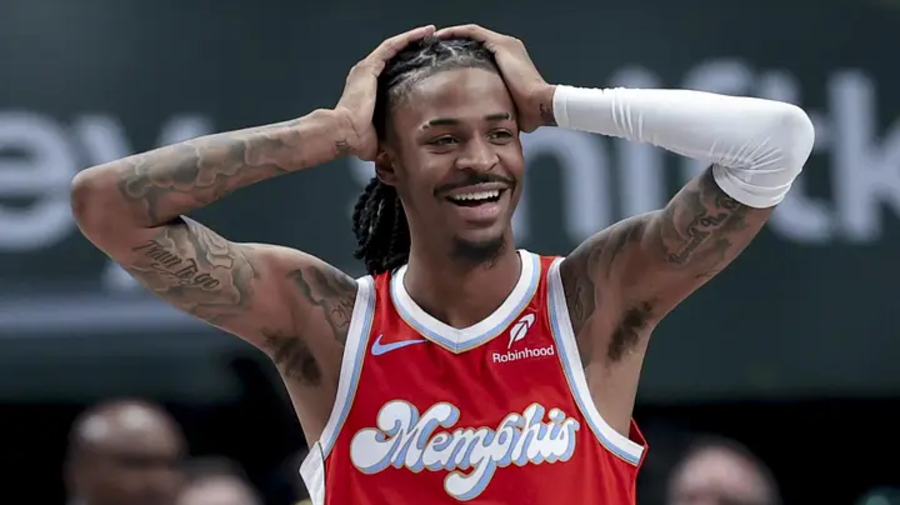
In the most stunning move of the NBA pre-free-agency period to date, the Memphis Grizzlies have traded Ja Morant to the Portland Trail Blazers in exchange for Jerami Grant and Kris Murray.
Morant, who’d spent his entire seven-year career with Memphis after being drafted second overall in 2019, now heads to the Pacific Northwest with four years and $197 million remaining on his contract. The 26-year-old is eligible to sign a three-year, $178 million extension this summer.
Portland is rolling the dice on Morant's health and focus after a turbulent stretch. Memphis, clearly in full rebuild mode, hits the reset button on one of the most electric point guards of his generation.
The Trade at a Glance
Portland receives: Ja Morant
Memphis receives: Jerami Grant, Kris Murray
On paper, this is a lopsided deal. Jerami Grant, 31, is a solid two-way wing but firmly in the second tier of NBA starters. Kris Murray, the younger brother of Jamal Murray, has shown flashes of promise but has yet to fully seize an expanded role. For Memphis, this appears to be a salary dump and a pivot. They are not trying to win now, and Morant's max contract, combined with the off-court uncertainty surrounding him, made moving on the pragmatic, if not painful choice.
Portland, meanwhile, is making a franchise-altering gamble. The Blazers have been in a quiet, patient rebuild since trading Damian Lillard to Milwaukee in the fall of 2023. They have accumulated young assets, accumulated cap space, and decided that with the addition of Morant, the time is now.
Morant is an elite talent in his prime. When he is locked in, he is one of the most electric basketball players in the NBA. He has a next-level first step with a high basketball IQ and vision, helping him to create. And at only 26, he's entering what should be the absolute peak of his basketball ability. If everything clicks, Portland just acquired a franchise cornerstone who could anchor a contender for the next decade.
What’s more, Portland can support him long-term. The Blazers' rebuild has not been flashy, but it has been deliberate. They hold several quality young rotation players, have cap flexibility going forward, and play in a Western Conference that, while competitive, is not impenetrable. Teams like the Houston Rockets and Oklahoma City Thunder have demonstrated that young, ascending franchises can leap from fringe contender to genuine threat in a single offseason. Portland is betting they can do the same.
A fresh start for Morant can be useful. Morant spent his entire career in Memphis, where his struggles both on and off the court played out under an unforgiving local and national microscope. A change of scenery might be a genuine reset button for players like him who need to escape their own narrative.
Portland is not Memphis. The media market is smaller, the culture is different, and the pressure of carrying a franchise from draft night onward is gone.
However, there is some downside to this for Portland. Morant’s contract is an anvil, as $197 million over four years is an extraordinary financial commitment for a player who has spent significant stretches of recent seasons either suspended or injured. Portland is not just buying Ja Morant the basketball player, but they are buying every complicated layer that comes with him. If this goes sideways, the Blazers are potentially locked into a franchise-crippling deal that handcuffs their roster-building ability for years.
Also, consider the contract’s extension eligibility. It’s a three-year, $178 million deal he can sign this summer, which adds another dimension of risk. If the Blazers feel pressure to lock him up before he potentially becomes a free agent, they could extend before they have a sufficient sample size of the "new" Ja Morant in Portland. If they don't extend him and he walks, the entire trade looks catastrophically shortsighted.
And don’t lose sight of the fact that Morant’s injury history is a legitimate concern. Morant's explosiveness is his greatest asset and his greatest vulnerability. His style of play—attacking the rim at full speed, elevating into contact, pushing into traffic—is inherently violent on the body. He has dealt with hand, shoulder, and knee issues throughout his career. The same athleticism that makes him impossible to guard makes him susceptible to the kind of freak injuries that can derail a career.
Portland needs Morant to be available. An 82-game regular season is not required, but they need a healthy Morant for the stretch run and, eventually, the playoffs. History suggests they cannot bank on that, and building a contender around a consistently unavailable player may prove to be a flawed foundation.
Lastly, Morant has an off-court cloud that won’t disappear when he arrives in Oregon. While he publicly committed to doing the work and attending counseling, the Trailblazers may need to deal with this if the issue resurfaces.
The NBA's progressive discipline model means that any future incident involving Morant would likely carry severe, potentially career-threatening consequences. That risk is now Portland's problem to manage.
What Memphis Gets
For Memphis, the math is cold but understandable. Jerami Grant is a serviceable, well-paid veteran who can mentor young players and model professionalism. Kris Murray is a young wing with untapped potential who fits a rebuilding roster perfectly. Neither player will lead Memphis to a title, but that's not the point. The point is to get out from under an expensive, volatile contract, reclaim roster flexibility, and begin the next chapter around younger building blocks.
But by moving Morant for this return, they are essentially admitting that the Grizzlies are starting a long rebuild. The franchise had one of the most exciting young stars in basketball and could not build a sustainable winner around him. Whether that failure belongs more to Morant, to the front office, to injuries, or to circumstance will be debated in Memphis for years.



Comments:
Log in or sign up to read and post comments.