Lebron Chooses Philly. Now What?
Can the 76ers Catch Lightning in a Bottle with James, Offseason Additions
By: Michael Simzak · 3mo
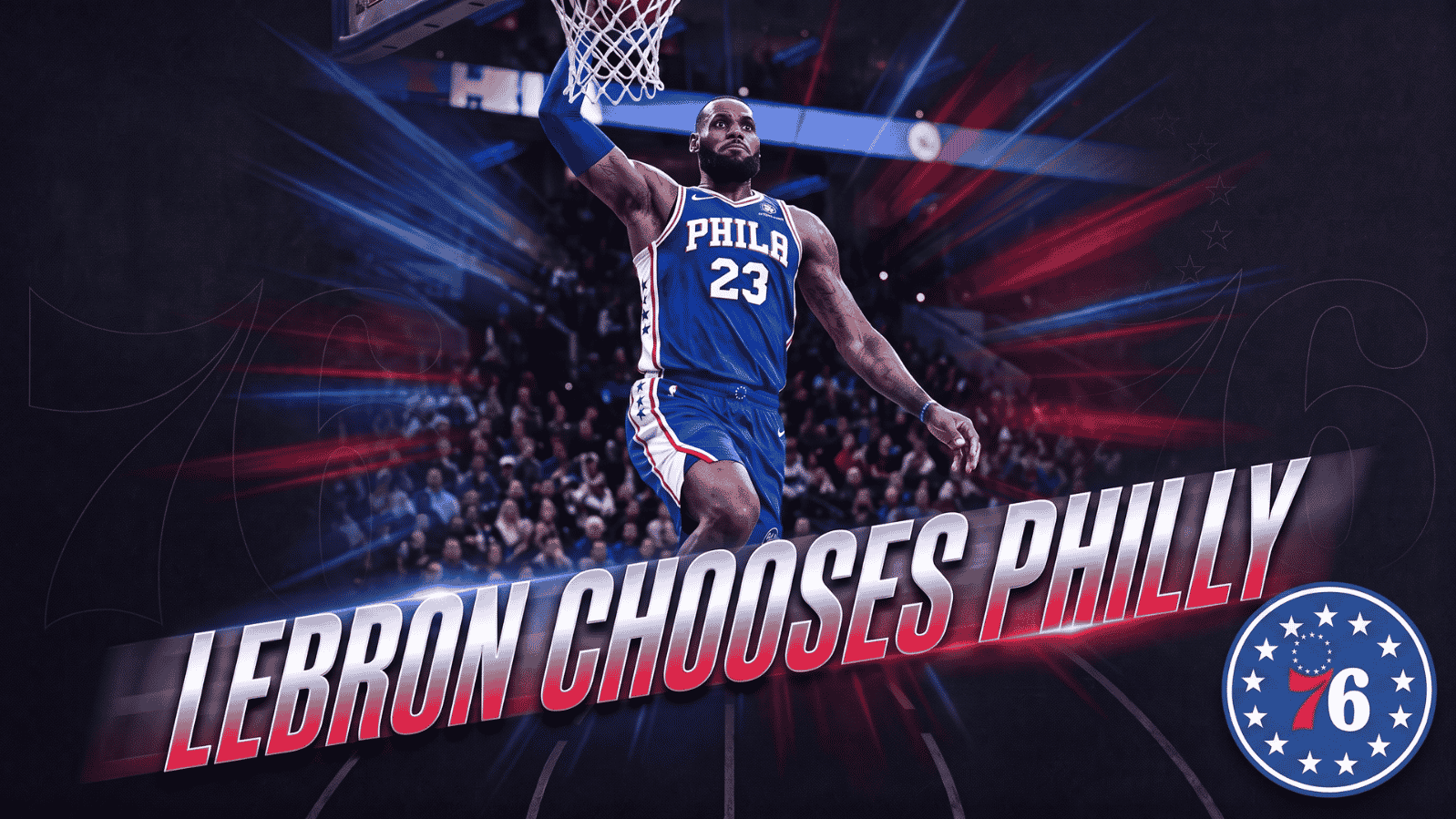
Almost 14 years ago, on August 15, 2012, I was at the National Constitution Center in Philadelphia when the 76ers held what amounted to a pep rally to introduce their newest additions: Andrew Bynum and Jason Richardson.
Bynum, then just 24 years old and coming off an All-NBA season with the Los Angeles Lakers, was the centerpiece of a sprawling four-team trade. At the time, it felt like one of the boldest moves the franchise had made in decades. There was a genuine sense of excitement and optimism—a belief that the Sixers were finally back in the business of competing for championships after spending much of the previous decade merely trying to make the playoffs.
Bynum never played a game for Philadelphia.
By the following offseason, general manager Tony DiLeo was out, Sam Hinkie had been hired, and the franchise had embarked on “The Process”.
Now the 76ers are preparing to welcome another former Laker in what is arguably their biggest player unveiling since that afternoon, and fans can only hope the results will be different this time.
Trading Paul George and a convoluted assortment of draft assets to the Boston Celtics for Jaylen Brown had already made Philadelphia one of the biggest winners of the NBA offseason. Friday’s announcement that LeBron James will join the team is the candle next to the cherry on top.
At 41, James is admittedly no longer the player he once was. He is entering his record-setting 24th NBA season and has described this as the final chapter of his career. But his arrival gives the Sixers a combination of star power, credibility, and national relevance that they have rarely possessed since Allen Iverson was catching passes from Eric Snow and Aaron McKie while Dikembe Mutombo patrolled the paint for the 2001 Eastern Conference champions.
The excitement is real and justified.
Immediately after I saw the announcement, I texted a member of the 76ers organization.
“Your job just got a lot more interesting.”
“Yeah, it did.”
A team built around the often-injured Joel Embiid, James, Brown, young star Tyrese Maxey, and emerging talent VJ Edgecombe will undoubtedly be one of the NBA’s most intriguing stories next season. Apparently, that intrigue was enough to persuade James to pass on the possibility of joining Stephen Curry in Golden State, returning to Miami, or completing a storybook homecoming to Northeast Ohio.
It certainly was not the money. James agreed to a two-year, $8 million contract with a player option for the second season, a dramatic pay cut for a player who earned nearly $53 million last year. By his own account, the decision was about continuing to compete and pursuing one final championship.
But why Philadelphia, and why now?
Eight years ago, James flirted with the possibility of joining a Sixers team led by a younger, healthier Embiid and Ben Simmons. Philadelphia sent a high-level delegation to meet with his agent, Rich Paul, but James did not attend the meeting and ultimately signed with the Lakers. This time, however, the circumstances were different.
James has a longstanding connection with new Sixers president of basketball operations Mike Gansey. Both emerged from the Northeast Ohio high school basketball scene, with Gansey finishing second to James in the 2001 Ohio Mr. Basketball voting. Gansey later worked in Cleveland’s front office during James’s second stint with the Cavaliers, including the franchise’s 2016 championship season. The two are not strangers, and James has reason to trust Gansey’s understanding of what it takes to construct a team around him.
Gansey’s trade for Brown appears to have changed the equation. Before the deal, Philadelphia could be viewed as an aging and expensive team trapped by the contracts and health concerns of George and Embiid. After it, the Sixers suddenly had a 29-year-old Finals MVP joining Maxey and Edgecombe—two dynamic young guards capable of handling the ball, initiating the offense, and creating their own shots.
Then came Rich Paul’s now-famous whiteboard.
During an episode of his podcast, Paul outlined potential destinations for James and described how Philadelphia could use him primarily as a power forward alongside Embiid. The point was not simply that the Sixers had room for another famous name. It was that their roster offered James a clearly defined role suited to this stage of his career.
James has become increasingly aware of where he can still be most effective. He no longer needs, nor should he be expected to serve as a team’s primary ballhandler and offensive engine for 82 games. Nor should he spend most of his minutes chasing younger, quicker wings around the perimeter. With Maxey, Brown, Edgecombe, and Anfernee Simons available to handle the ball and initiate the offense, James can operate more selectively as a secondary creator, screener, interior scorer, and connective passer.
Defensively, Embiid, Adem Bona, and newly acquired Ariel Hukporti should handle most of the rim protection and interior punishment. That structure could allow James to contribute without absorbing the nightly physical burden he might face in a less complete frontcourt.
The fit also makes sense for Philadelphia.
James arrives with a clear understanding that he is now an elder statesman as much as a superstar. Few players could be better equipped to mentor Maxey, Edgecombe, and first-round pick Labaron Philon. His preparation, basketball intelligence, conditioning, and ability to withstand unprecedented scrutiny could provide lessons that no coaching staff can fully replicate.
His presence will also fundamentally change the atmosphere surrounding the franchise. Every game will become an event. Every losing streak will become a national discussion. Every injury update, lineup decision, and deadline move will be scrutinized. For Philadelphia’s younger players, sharing a locker room with James will be an education in what it means to play alongside an all-time great and to accept the expectations that accompany him.
That does not mean the move is without risk.
From outside the organization, the expectation will immediately become championship or bust, even if the Sixers do not possess the depth, continuity, or collective athleticism of teams such as Oklahoma City, San Antonio, or New York. A team featuring James, Embiid, Brown, and Maxey will not be afforded a developmental season. James chose Philadelphia because he believes it can compete now, and the organization must operate with the same urgency.
That means the Sixers cannot repeat their recent practice of making late-season financial maneuvers primarily to slip beneath a luxury-tax threshold. They are already operating close to the first apron, and maintaining flexibility will be difficult. But after signing James at a steep discount, ownership cannot undermine the roster at the deadline merely to reduce its tax bill.
There is also the question of influence. James has never been shy about expressing opinions on personnel decisions, and Paul has become one of the most powerful agents in professional sports. No matter how much mutual respect exists between James and Gansey, the organization will have to maintain a delicate balance between listening to one of the smartest players in basketball history and allowing its front office to retain control of the roster.
Still, the reasons for excitement are real, and they extend beyond the coming season.
The immediate goal is obvious: reach the Eastern Conference Finals, and perhaps the NBA Finals, for the first time since 2001. But the “LeBron effect” could benefit Philadelphia even after he leaves. His arrival restores the Sixers’ relevance, strengthens the organization’s credibility with players around the league, and gives Maxey, Edgecombe, and Philon an opportunity to learn directly from one of the most accomplished athletes in American sports history.
None of that guarantees success. Embiid’s health remains the central variable. James is approaching his 42nd birthday. Brown must adapt to another high-usage roster, and the Sixers’ depth may be tested over a long season. There are legitimate reasons to wonder whether this collection of talent can remain healthy, develop chemistry, and survive four rounds of playoff basketball.
But there are also legitimate reasons to believe that it can.



Comments:
Log in or sign up to read and post comments.